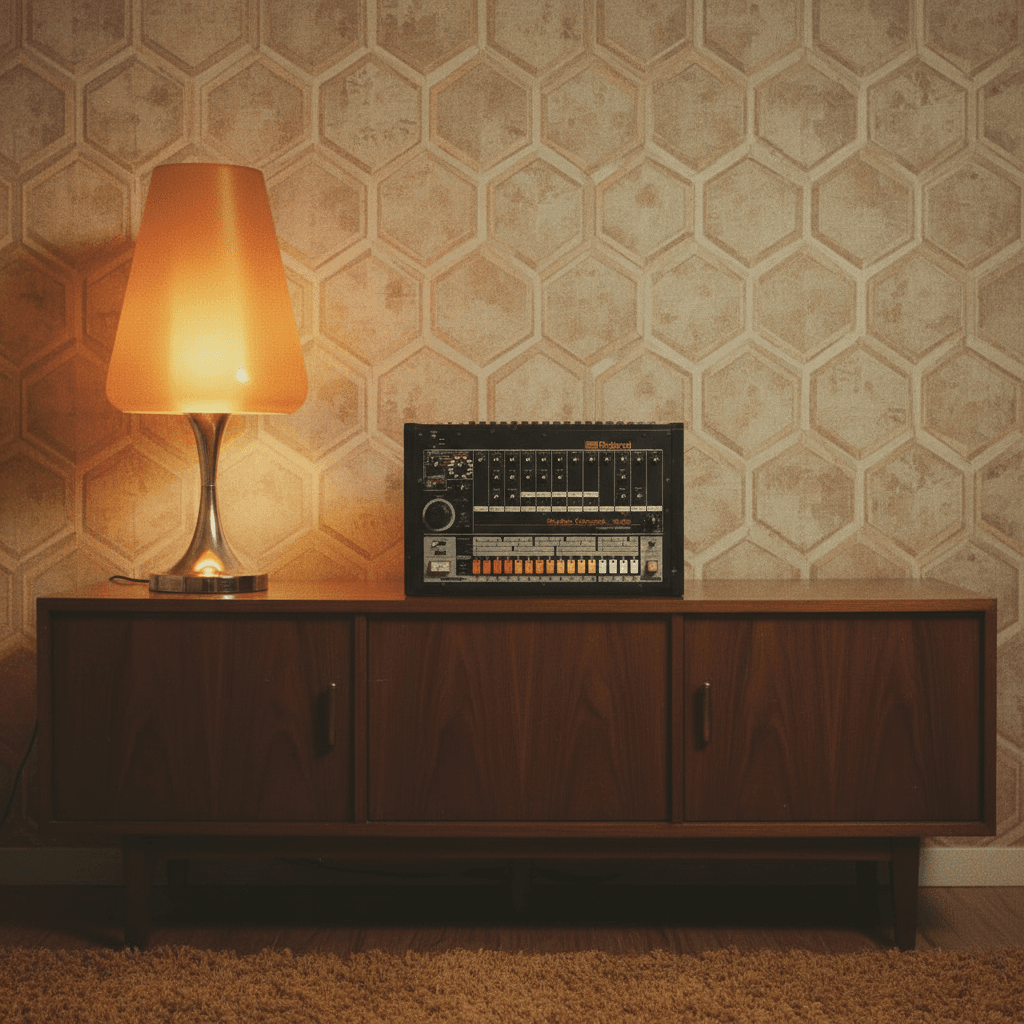
TB-303: The Acid Canon
From Chicago basements to global raves — the machine that created acid house.
In 1981, Roland released the TB-303 Bass Line — a small silver box designed to replace bass guitarists in home studios. Like its drum machine sibling the TR-808, the TB-303 was a commercial disappointment. It sounded nothing like a real bass guitar. Roland discontinued it after 18 months, having built only about 10,000 units.
Five years later, those unwanted boxes — available for $50 at Chicago pawn shops — would give birth to an entirely new genre.
The Chicago Connection
The story of acid house begins in Chicago around 1985-1986, in the city's vibrant house music scene. DJs and producers like DJ Pierre, Spanky, and Herb J were experimenting with cheap equipment in a basement on the South Side.
According to the most commonly told origin story, DJ Pierre was twisting the TB-303's knobs semi-randomly when the characteristic squelching, resonant sound emerged. "Acid Tracks" was born from that moment of accidental discovery.
The TB-303's unique sound comes from its voltage-controlled filter — a 4-pole low-pass filter with a resonance control that, when cranked up, creates that unmistakable squelching, bubbling, screaming tone. No other synthesizer sounds quite like it.
Acid Tracks
Phuture(1987)
The track that started it all. Twelve minutes of raw, hypnotic TB-303 lines over a drum machine beat. When Ron Hardy first played it at the Music Box club, the crowd didn't know what to make of it. By the third play, they were losing their minds.
Crossing the Atlantic
By 1988, acid house had crossed the Atlantic and ignited the UK rave scene. The Second Summer of Love — the explosive convergence of acid house, ecstasy culture, and outdoor raves — transformed British youth culture forever.
When I first heard acid house in Ibiza, I knew music would never be the same. That 303 sound cut through everything — it was alien, it was primal, it was the future.
Labels like Trax Records and DJ International in Chicago, and Acid House Records in London, released a flood of 303-driven tracks. The sound evolved from raw and minimal to increasingly complex and layered.
Voodoo Ray
A Guy Called Gerald(1988)
Manchester's answer to Chicago acid. Gerald Simpson built this track around a haunting vocal sample and swirling 303 lines, creating one of the defining records of the UK acid house movement.
Legacy
The TB-303 didn't just create acid house — it opened the door to an entirely new relationship between musicians and machines. The idea that you could misuse an instrument and discover something beautiful became a foundational principle of electronic music.
This playlist traces the 303's journey from Chicago basements to global dancefloors. 24 tracks of squelching, resonant, mind-altering acid — the sound that changed everything.